The e20 Experts Corner: Shrinking to Expand

The Council frequently conducts Q&A teleconference call-ins with e20 gurus.  The calls are very casual, but are always illuminating and worth the 60-minute investment for everyone who shows up.  Last week’s guru Q&A was with Jeff Dachis, head of The Dachis Group here in Austin.

As I listened to Jeff’s preamble about who he was and where he came from, it surprised me that I forgot this is the same

http://www.flickr.com/photos/essjay/1418941439/

Jeff Dachis that jump-started a new sector in the IT services space in the late 90s when big corporations were smirking about the oncoming Internet revolution.  Of course, during the dotcom heyday, you couldn’t tell what was a sock puppet from what what was real. The easiest course of action was to deny anything was happening.  (There’s a big story in what actually did happen in the e-services sector, but that’s a story for another day.)  The fact that the market crashed made it look like the naysayers were right.  Yet, a decade later, most everyone will agree the Internet did change the world as we knew it, and it changed the business world irrevocably.  Jeff himself was the one who said, “In the future, everything that can be digital, will be.”  While we were on the call, Jeff described the post dot-com era as the “Internet winter.”  One of our members chimed in immediately with, “We’ve awoken now to the Social spring.”  That is a great metaphor to describe the phenomenon that’s now unfolding.

In 2006-7, everyone watching this new space of Enterprise Web 2.0 was eager to share what they knew, spontaneously connecting and collaborating.  All the up-and-coming experts emerging in the space all knew each other and helped define and chisel the image of the new market opportunity.  I’d say by mid-2009, everyone recognized the market was maturing.  It was about that time I launched the Council, and soon after, Headshift was acquired by the Dachis Group. Other alliances formed over the past year, e.g., through Gartner’s acquisition of Burton Group, Mike Gotta can now teach Gartner clients about e20, Oliver Marks and Sameer Patel joined forces to create the Sovos GroupGil Yehuda went to work in Silicon Valley, and the Altimeter Group is crossing over into the sector with its focus on social CRM.

The cheese that stood alone in the consulting crowd was Dion Hinchcliffe whom I once referred to as separated by birth from the Dalai Lama.  Today, Dion is announcing his company has also been purchased by The Dachis Group.  This is a terrific development in our sector as the consultants who’ve been independent are recognizing there is a tremendous amount of demand to understand and adapt to the technology-driven disruption and innovation that is exploding around the globe as a result of the socially interconnected web.  Where the majority of our members in the Council are inventing wheels for the first time, the extension of their hard work will require a bench of professional talent.  In order for consultants to meet that demand, consolidation is the only way to deliver by taking advantage of economies of scale. Whether the opportunity is strategy, technical integration, education, or assistance with deployment, the days for external evangelism are probably coming to an end.  The idealism that led the first era of this sector has now been replaced with pragmatism and will help businesses of all size move to the next level.

It reminds me of the boutique firms that cropped up in other eras that helped large companies manage the transition from before to after. Over time, the large consultancies will enter the market.  That’s when we’ll know we’ve arrived.  I’ve already seen some interesting arrangements with off-shore firms who have some unique capabilities to bring to the party.  As this business turns its attention to growing up, I applaud the pioneering efforts of these early bloggers and teachers who’ve brought us to this point.  So whether we quibble over our own insular naming conventions or accurate assessments of what is is, one thing is for certain, we’re ready for take off.  Buckle up.
For Ada Lovelace Day: The other Esther Dyson

http://www.flickr.com/photos/stewtopia/ / CC BY-SA 2.0

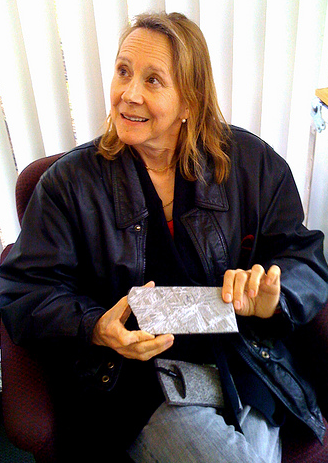
It’s hard to not think of Esther Dyson on a day that recognizes women in Science and Technology.  I’m not the first to write about her for Ada Lovelace day, but I hope to reveal a side of Esther that will serve to inspire women everywhere.

I first met Esther in 1989, I believe.  I was working for CMP (Now TechWeb/UBM) on Long Island, and my boss asked me if I wanted to join him at a lunch date with her.  “Absolutely!” I said.  There was no equivalent back then to Esther (and probably hasn’t been since.)  She was a bona fide tech icon.  Even then.  Without Twitter and Facebook, even.

What I found most curious about our lunch was, in addition to sharing morsels of wisdom, she took the time to speak to me personally, in earnest.  She told me to check out a few women in technology organizations and offered to introduce me to some contacts that shared some of my interests.  I never forgot that meeting.  (I’m sure she did.)  What was memorable was her kindness and instinctive generosity, in addition to her intelligence and confidence.

Over the years, I kept in touch with Esther mostly as a reporter/researcher.  She never hesitated to return an email or give me a quote.

In 1998, when I decided to launch a business, I reached out to Esther to become what I cleverly described as an “e-Advisor.”  Essentially, my pitch was that I would only contact her if it was absolutely necessary, and all she’d have to do is return an email with her thoughts.  I still have the original email I sent her.  It’s a little over-the-top, but to her credit, she not only agreed to be an “e-Advisor,” she agreed to meet me in her office in New York to review my business plan.

Long story shorter, over the years, Esther has always (always) been there when I’ve reached out.  I most of the time can’t believe it.  Her advice has saved me from some pretty dumb amateur mistakes, and her insight has opened my eyes to considerations I never would have recognized on my own.  I once sent her a Van Morrison CD because I felt I needed to do something to thank her for all her support and help.  It wasn’t much, but I couldn’t really think of anything she could possibly need, so I sent her something I liked.

The lesson in this story for women everywhere– and all professionals young and old– you’re never too famous or too special to show a kindness to a stranger.  Share what you’ve learned over the years with someone who’s still learning.  Just this week, Esther has been helping me sort out a business opportunity.  Once again, I begged her to let me do something for her.  To this she responded:

For this reason, in addition to being a brilliant technology and science icon (who happens to be a woman), I celebrate Esther for being just a really great human being.  May we all (attempt to) emulate her.

Enterprise 2.0: The Next Narrative

Enterprise 2.0 was launched in the spring of 2006 as a result of Andrew McAfee’s case study interviews in 2005 on Dresdner Kleinwort Wasserstein (DrKW), an investment bank in London.  The story unfolded after he and his team studied the work of J.P. Rangaswami, who was then Global CIO of the bank.  It’s sometimes surprising to me when I realize how much has changed since those early days.   For starters, the technology foundation of the DrKW case study was wikis (Socialtext), blogs (b2evolution), and messaging software (MindAlign).  Of these three, only Socialtext is what I would consider top-of-mind in the E20 sector (and the company’s software has extended well beyond an enterprise wiki.)  J.P. Rangaswami even left DrKW and has successively mastered several positions at BT where he is now Chief Scientist.

In short, Enterprise 2.0 is maturing.  It’s high time for a new series of case studies.  This week, McAfee (today, speaking at SXSW) and I are announcing  The 2.0 Adoption Council and MIT’s Center for Digital Business will be co-producing a series of case studies that explore the modern dynamics driving the 2.0 phenomenon in a sampling of large enterprises.  We’ve identified the following themes that are present in most initiatives:

  • Innovation:  Leveraging collaboration and social activity to spur discovery, idea generation, and breakthroughs for the organization or customers
  • Time-to-Market: Accelerating the time to bring products/services to market by collapsing artificial silos/boundaries and time zones
  • Cultural Reinvention: Using the philosophies of 2.0 to reshape the organizational DNA, embracing transparency, collaboration, trust, and authenticity
  • Visibility: To provide a real-time view into operations and business process by connecting people and ideas.
  • Cost Reduction: Substituting more agile, lightweight tools for connecting and sharing that are easier to manage and significantly reduce operational cost.
  • Knowledge-sharing: Harvesting institutional knowledge of the enterprise for the purposes of retaining it, exposing it and providing easy access to it.
  • Expertise location: Indexing and surfacing hidden and known talent in the Enterprise.
  • Productivity improvement: Providing socio-collaborative tools to the workforce for measurable gains in productivity.
  • Talent Retention: Providing tools that add to workplace satisfaction and positive employee work experience, especially germane to retaining GenX and GenY talent.

Each case study, written in a detailed contextual narrative, will highlight at least one of these themes.  Our goal is to produce approximately a dozen solid case studies from different industry sectors.  We will be delving into the business rationale for each case, its particular adoption strategy and status, as well as the expected business results.   We hope to be able to discuss the progress on these case studies at the Enterprise 2.0 conference in mid-June.   As soon as I have secured our sponsor commitments, work will begin immediately.

If you have suggestions for the case study series, I’d love to hear them.

Announcing Prizes for Winners of the 2.0 Prediction Market…

Last fall, we announced our 2.0 Adoption Index Prediction Market.  The market is a partnership between the 2.0 Adoption Council and Crowdcast.* We are tapping into the knowledge of E2.0 experts and evangelists to crowdsource predictions and insights about the adoption of 2.0 technologies within organizations.  This is addressing a need we’ve heard many times – that it’s challenging to obtain accurate data about where Enterprise 2.0 is heading.

The forecasts in the Prediction Market will be “closed” based on a select sub-set of data from the 2.0 Adoption Council’s twice yearly member survey – the next survey will be conducted in May 2010.  Participants can bet on forecasts until March 31.  The results will be announced during the Enterprise 2.0 Conference in Boston from June 14-17.

Now Announcing Prizes for e20 Fans and Friends

Some dedicated supporters of the E2.0 community have generously donated prizes.

The top player as of 11:59PM PST on March 31 will receive a free Market Leader (full) conference pass to the Enterprise 2.0 Conference in Boston from June 14-17

The player in 1st place after we close the forecasts (May 2010) will win a private breakfast at the Boston conference with Dion Hinchcliffe, an internationally recognized business strategist and enterprise architect with an extensive track record of building enterprise-class solutions with clients in the Fortune 500, federal government, and Internet startup community.

The player in 2nd place after we close the forecasts (May 2010) will win a beer with Andy McAfee during the E2.0 Conference in Boston.  Andy coined the phrase “Enterprise 2.0” in his 2006 Sloan Management Review article “Enterprise 2.0: The Dawn of Emergent Collaboration.”  Andy’s an MIT professor, writes a popular blog about Enterprise 2.0, and is quite the beer connoisseur.

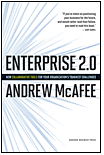
5 participants will win a raffle drawing for an autographed copy of Andy McAfee’s book Enterprise 2.0: New Collaborative Tools for Your Organization.

Sign up now to win: https://adoptionindex.crowdcast.com

*For a video overview of how Crowdcast works, click here.

Where Business Process Meets 2.0

The 2.0 Adoption Council is experimenting with a range of new market ideas that leverage the power of the social web.   The 2.0 thinking surrounding network effects, scale, voluntary collaboration, free (as a business model), and social performance/productivity improvements are just a sample of some of the drivers that have made the Council thrive.  Much of these attributes are present in a new concept described recently by John Hagel and John Seely Brown as, “The Collaboration Curve.” Specifically the authors point out, “The more participants–and interactions between those participants–you add to a carefully designed and nurtured environment, the more the rate of performance improvement goes up.”  Hagel also describes on his Edge Perspectives blog the move away from a transaction-based economy to a trust-based relationship economy.   He refers to as this as a “passionate community.”  His words:

In sharp contrast, passion holds the key to creating and shaping relationships that will help us thrive in a rapidly changing world. It motivates even the shyest of us to reach out and connect with others in ways that become catalysts for creativity and growth. Passion fosters a uniquely strong and productive bond that provides both the stability and stimulus needed to continue to grow and succeed in a constantly changing world.

What Hagel is describing is present in the Council today.  Simply look no further than the comments from the members themselves on my LinkedIn profile and our testimonials.  With this passion, comes business opportunity.  The combined intelligence of our early adopter 2.0 membership has become a no-brainer target for vendors interested in harvesting the group wisdom of these world class customers.   To that end, we are proud to announce today we have entered into an innovative co-creation research relationship with SAP.  SAP announced its 12Sprints public beta today.  It’s important to note that 12Sprints is not typical social/collaboration software, but rather a a SaaS-based, goal-oriented, collaborative decision-making tool that incorporates social features such as activity streams, presence, and profile data.  The objective for 12Sprints is to draw enterprise data into a conversation where it can be discussed, analyzed, and openly decided upon by geographically dispersed team members.

Although I’ve often been critical of SAP in the 2.0 arena, I’ve always marveled at the “engine” that drives global business on the SAP platform.  This first step toward bridging that gap between the core business processes that make the trains run on time and a front-end of 2.0 capability (including integration with various  popular 2.0 tools) is a welcome advancement in the maturation of the market.   Further, it’s particularly encouraging that SAP would choose the Council to partner on the co-development of this strategic new direction for its blue chip customer base.  It represents an unmistakable endorsement and recognition for our business model, the power of our membership, and the promise of innovative alliances to reshape how products get to market.

Below is a Skypecast I did informally last week with SAP SVP Marge Breya that discusses trends in 2.0 adoption and the nature of our relationship.

SAP’s Marge Breya discusses e20 with Susan Scrupski (aka ITSinsider) from susan scrupski on Vimeo.

Don’t Lose Yards in the E20 Super Bowl

It’s that time of year again and everyone in the USA has Super Bowl Sunday on their minds.  It occurred to me that common penalties in American football have a lot in common with penalties for rolling out an Enterprise 2.0 strategy and deployment.

Here’s a quick chalk talk for e20 evangelists everywhere who are trying to move the ball downfield in their organization.  Enjoy.

Enterprise 2.0 Chalktalk

Council members @bg1501, @greg2dot0, @rpetersen, @kevincrossman, @briantullis, and @thebryceswrite cheerfully collaborated on this presentation.